This site will contain articles of travel, birding, farming, agriculture, gardening, nature, poetry, hobbies, love, life, etc
Simple Recipes for Puchkas or Panipuri at your Home
Oscars 2022 Nominee- LUNANA: A YAK In The CLASSROOM
The world never expected that a Bhutanese
Film Industry would tell the story of the small Himalayan Kingdom of Bhutan in
the Oscars. The Bhutanese Drama Film made to the much awaited Oscars nomination
2022 final list along with other four films from hundreds others. It is the
first ever Bhutanese film to be nominated for the Oscars award in the history
of Bhutan and there are every chances that the trophy would come home.
The journey to the nomination for 94th Academy Awards was challenging right from the registration phase where Bhutan was not even in the list of countries applying for the nominations. The versatile Director & Producer of the film, Pawo Choyning Dorji shares in his interviews that he had to wait until the website was updated with our country name and language (Dzongkha) details at the final hour. While, the film has so far entered in 12 Internationals Film Festivals to winning The Audience Choice Award at the 31st Annual Palm Springs International Film Festival in 2020 since its debut in October, 2019.
LUNANA: A Yak in The Classroom will
tell us the truth of finding the happiness in the light of darkness through the
story of a young teacher who was placed in the world’s remotest school. At first
he regrets coming to such a place with no basic amenities but slowly begins to
love his students and the environment. However, his dreams to pursue his
singing career in Australia haunts him inside. He leaves to his dream land
breaking the hearts of his students especially of the little class captain Pem
Zam. He becomes the best and favorite teacher of those innocent students and write
him a letter to return to them in Spring.
In general, it’s about the
happiness we seek within us in a GNH country, our education system and the
young Bhutanese leaving for greener pastures in foreign land in pursuit of
happiness and comfort. It’s the sad reality that hundreds of young and
potential Bhutanese leaving amid the pandemic which might lead to the brain
drain crisis sooner or later. Are we failing in the education or the system of
education or in any field? Can we find more happiness in the dark valley of
Lunana like those innocent children and the community living there for ages?
The answer is big YES and Ugyen soon realizes to come back to embrace his
beloved students and his secret admirer Saldon.
It’s about our tradition and
culture. Ugyen refuses to offer the prayers to local deity on his way to school
when his guide Michen suggest but he does on his way back to capital. He practices
and sings Yak Lebi Lhadar a traditional song of Lunana Yak herders. He accepts
the reception and see off simple ceremonies with prayers/songs and recall his
guides Michen and Singye singing over the open jungle fire place on their 8
days’ perilous way to school while he was on the western music over the
headphones. The Yak dung becomes the practical way of lighting a fire in a
place where electricity has no place. The Yak Norbu inside the class room
becomes the catchy title for the world but it has more to do with students,
teacher and Saldon who gifts to Ugyen. It’s a symbol of love and bond between
all of them.
It’s about the ever changing
world of modernization into climate change and the environment. His guide
Michen shares the declining snow line story over the peaks to valley that
represent our pristine environment and nature with deep concern. Are we not
responsible for the global warming and climate change? We all ought to be the
environment champion to the world in all times to come. It is our personal to
social to national to regional to global responsibility for the humanity. It’s also
about the poverty line we normally ignore as in the movie with a child wearing
a red plastic boot. Ugyen stares at the boot of a host child who was fondly
wearing in the kitchen fire place as a guest with his guides on his way to
school. While, the elderly people choose bare foot over any foot wear or
expensive shoes walking in muds and thorns. Yet they are happy and contended
but what about the lot those who don’t have proper clothing and foods? They
need our helping hand and compassionate heart.
It’s about the leadership we
need at the grassroots level as shown by Asha Gup (the village head). It’s not
only about the qualification and highly trained leadership skills one poses but
a simple hospitability and the cooperation we give to the other person on time
of need. His timely help to put a wooden blackboard over the wall put smiles on
Ugeyn and his students face. The Gups in our 205 gewogs has immense
contributions in the communities especially for the schools as most of the
extended class rooms and primary schools are under their jurisdiction for
budget and developmental activities. My friend Jigme Jamtsho, an officiating
principal of Bukey Primary School, Samtse is a living example and the Gup there
who poses all these true qualities of leadership.
It’s about the passion of
teaching and learning irrespective of the facilities in place. The skills to
manage and learn with least resources. Ugyen sacrifices his paper curtain over
the window and use it for his students. He signs for his students and the Yak
Norbu finally. Are we chasing the wrong dreams and living the disguised
reality? May be Yes because every one of us wanted to pursue a high profile job
when we graduated from high school. However, we landed up in no choice option
of teaching and other low profile jobs in the market where our focus and
passion are compromised for quality. We are lately realizing the skill based
education which is not too late for us.
And it’s about the burning
passion of every child not just of the innocent Pem Zam to learn the every
subject they ought to study. Their relationship as a teacher-student is amazing
and the role of class captain by Pem Zam is the heart of the movie. This cute
innocent girl with natural charisma is a born actor and simply authentic.
If Oscar award comes home this Monday
on 28th March, 2022, the one criteria I would set for the win would
be simplicity and authenticity of natural acting by every characters in the
movie apart from the main themes. In life everything is beautiful when it is in
natural state. We tend to seek the beauty and happiness in the fake and far
world outside where every happiness and beauties lies within us.
LUNANA: A Yak In The Classroom
is a unique movie to outside world from the title itself but is a common quest
of happiness for all as a human being. The movie location itself is chosen
particularly at Lunana which means a dark valley where people’s perception of
seeing the light is less but in reality the spark is within us. The metaphor of
our lives played by the characters and the real lives of Lunana people in the
movie is the truth and reality of all human being to be in constant state of
happiness.
If Oscars had to see the
technical criteria from filming and cinematography point of view, then also it’s
nothing less in the making of the film. It was in fact filmed with the most
challenging resources right from all crew members and the raw actors who has
never faced a camera before. It was shot on the remotest village on solar
powered battery without out much option to do recap and video editing often as
required. The Director of the film shares that the toughest category of the
film making is with animals and children where the center of attraction in the
movie is by Pem Zam and the yak Norbu.
This is a must win Oscars movie
for me in this over dreamy world of dreams, desires, power, ego, hatreds and
war. We can be happy and contended in our small home and space. We don’t need
big house or more money to shelter ourselves from the quest of happiness in
faraway place as long as we are alive every moment. We don’t need so much
modernized world of science and technology of AI and robotic to loose ourselves
to the them sooner or later. We are already in the verge of extinction over our
own discovery of bioscience and nuclear energy. We are choosing the wrong path
against the nature in the name of technology. One can get the glimpse of this
reality in this Oscar winning movie. Watch the movie , if you have not and contemplate yourself.
An Evening for a Bird- Webinar Series by Bhutan Birdlife Society (BBLS)
I was invited for a talk on my new bird species record to Bhutan by Bhutan Birdlife Society (BBLS) that was scheduled on 18th March, 2022 evening 6:30 to 7:30 pm BST. The Webinar Series- An Evening for a Bird was initiated by BBLS to exchange knowledge and information among the members about the birdlife in Bhutan. It is to promote citizen-science and environmental stewardship of the members through networking and friendship. The platform was conceived by the core members in 2020.
It was an honor for me to be the
first Guest Speaker of the Webinar Series hosted by BBLS. I was excited and
nervous at the same to share my story. The patron of BBLS Dasho Benji graced
the Webinar. The Webinar went well with much appreciation from Chairperson, the
members and the participants.
The BBLS Project Manager, Mr.
Yeshey Dorji welcomed all the members and the participants for this first ever
Webinar Series Talk followed by the facilitator, Mr. Tshering Phuntsho on the
background of this very concept of the Webinar and also introducing the
speakers. Dasho Benji gave an opening remarks to all the participants and was
really touched by the passion of young birders for conservation.
After the opening remarks, the
facilitator handed over me the screen. I thanked him and wished Patron,
Chairperson, BBLS members and the participants a very good evening. I also
thanked Bhutan Birdlife Society for inviting me for the first Webinar Talk
among other talented birders and the experts in the group.
My
Introduction
I introduced myself to the audience. I am Purna Bahadur Rai. I have a B.Tech Mining degree from National Institute of Technology (NIT), Rourkela, Orrisa, India and by profession I am a Mining Engineer. I have been birding for the last five years now. My favorite bird is Wallcreeper (Tichodroma muraria). This bird species has close habitat association with my work place as it is the winter visitor to my mining site. The mining has positive impact on habit creation for this species among others who love to forage in the open dry and degraded areas unlike other species. Thus, this is a significance of this bird to my profession. My total bird count so far is 240 species which I have the photographic record shots of each species. My talk was on the new bird record to Bhutan which I first sighted on 19th May, 2021 in my residential area at Nyoenpaling (Pugli-B) under Phuntshopelri Gewog, Samtse.
My
Personal Journey in Birding
I shared my personal journey to
the audience before my main talk. I started birding five years ago (2017) when
my cousin (Mr. Sancha Rai~Teacher) introduced me to the Birds of Bhutan (BoB)
Facebook page group. Since then, I kept posting my record to Birds of Bhutan
group and in 2019, we published a short article of my favorite bird Wallcreeper
in our (PCAL) annual newsletter. The BoB members and birders were impressed
with my passion and interest in birding. My friend Tashi Tshering, a Sr.Forest
Ranger gave me a courtesy call and invited me to join the Dragon Birding Amigos
(DBA), an avid birders group of Samtse.
Thus, joining DBA was a great
journey and there after we went birding in group hunting some rarely found
species like Hooded Pitta (Pitta sordida) in Kalapani areas,
Phuntshopelri, Samtse. The rediscovery of Eurasian Sparrowhawk (Accipiter
nisus) from Noyenpaling (Pugli-B), Phuntshoeplri after one and half decade
was astonishing. The earlier record was by P. Spierenburg in 2005 from Samtse. The
publication of a book-A Guide to the Birds of Samtse 1st edition was
another big achievement for DBA team in 2020.
The year 2021 was more fruitful for my birding journey despite pandemic and a dream come true moment to add a new bird species to Bhutan. It was a Black-headed Cuckooshrike (Lalage melanoptera) which I recorded from Nyoenpaling (Pugli B), Phuntshopelri, Samtse on 19th May, 2021. It was during the lockdown period that I heard a unique bird call in my kitchen garden. I scanned for two days and on the third day I was fortunate to take a record shot. I shared to my amigos and BBLS members. They confirmed it as new record to Bhutan. Other species like Dark-sided Thrush (Zoothera marginata) from Pendenling (Gomtu) which is also a third record to Bhutan as per the experts and Dusky Thrush (Turdus eunomus) are new to Samtse birds’ list. We also presented a paper on Samtse’s Song Birds (An Annotated Bird Checklist for the Selected Regions of Samtse recorded between 1 September and 31 December 2020) to Bhutan Ecological Society (BES). The year was fulfilling amid the pandemic.
Dragon Birding
Amigos (DBA) Team
We are an avid birder from Samtse and Thimphu from diverse
backgrounds but with same passion in birding and conservation. We are a teacher
not just in four walled classrooms but in the wild with nature. We are a
forester not just in dress but in the field of action for nature. We are a
financial manager not just a broker but who invest in nature conservation. We
are a nature guide not just for the tourist but for all the nature lovers. We
are an office assistant not just in office but assisting the team of conservationist.
We are an engineer not just only for the humans’ infrastructure development but
for the balanced eco system. We are Dragon Birding Amigos (DBA).
Black-headed
Cuckooshrike (Lalage melanoptera)-New record to Bhutan.
Identification:
The Black-headed Cuckooshrike has a dark slaty-grey head, neck and upper breast. It has pale grey body and wings are darker grey than the mantle with white belly. It is a medium sized Cuckooshrike measuring 18 to 20 cm in length and weighing 25 to 35 gram (Birds of India). The female lacks the black hood and has a whitish supercilium, brownish gray upperparts with lightly barred back and rump. It has buff-white underparts with wide brown bars. The juvenile and immature is similar to female with an upperparts barred white (ebird.org).
Distribution:
This species is distributed in
the Indian Subcontinent and Southeast Asia (Wikipedia, 2021). The closest
record of this bird to Bhutan is from Darjelling (27.1N, 88.7E) and Puruliya
& Bankura (23.3N, 86.0E) in West Bengal, India in 2015 and 2019 respectively
(eBird Observation Dataset (n.d)).
It breeds in Northern India (in
Punjab and Uttar Pradesh) and Myanmar (avibase, n.d.). It is a migratory bird
in Assam. It habitats mostly in light deciduous forests and open broadleaved
secondary growth forests in the plains and hills up to 2,000 masl (India
Biodiversity Portland, n.d.). This means we can expect this species in higher
regions of our country not just in southern belt of Bhutan. The study claims
that the lowlands birds are moving upwards in the highlands. (How new bird
species arise-https://phys.org/news/2022). Thus, one should not be surprised to
see this species in Thimphu or other regions of the country in future.
Its status as per the
International Union for Conservation of Nature (IUCN) is Least Concern. It has
a stable population as per BirdLife International 2017 and has no population
surveyed carried out yet. This species mainly feeds on insects, moths,
caterpillars, cicadas, butterflies, crickets, beetles, grasshoppers and they
occasionally feed on fruits, figs and berries (https://indianbirds.thedynamicnature.com/).
Location:
This species is first recorded in Bhutan from PCAL, Pugli colony, Nyoenpaling (Pugli-B) under Phuntshopelri Gewog in Samtse. The geo-coordinates of the area is 26°49'26.68"N, 89°13'33.35"E. The Nyoepnaling (Pugli-B) is located at an elevation of about 405 masl. The record shot was taken on 19th May, 2021 during the lockdown period. I was in kitchen garden when I heard its call two days before the record shot. I was scanning the area for the new call and on third day, I could finally photograph the bird on a teak tree top. Thus, a mining engineer landed up discovering new bird record to Bhutan instead of stone or minerals. That doesn’t mean that I am not carrying out my entrusted job but I explore both in the field.
Challenges
in Conservation of the Birds Species
Watching birds is a beautiful
journey but there are challenges on the way in its conservation. We human have
become so selfish that we are taking away more space than what we actually
need. We are moving from survival to the path of extinction sooner or later in
the name of comfort and modern development. Our very own infrastructure
developments like roads, dams, power lines, buildings, etc are direct or
indirect threat to the birds/avifauna and other living being on this only
planet Earth.
Similarly, the extractive industries like mining/quarrying, dredging, deforestation, sand extraction and expansion of agriculture are the areas where we need to develop in unity without having to comprise the lives of flora and fauna. The forest fires are another reckless human error and sometimes even intentional for fodder grasses. We can minimize all these threats and practice eco-friendly activities with the passionate heart of belongingness for every lives on this Earth.
Conservation
Efforts by Mining Personnel and Companies or Industries
As a mining professional I ought
to protect the environment as much as I exploit. It is the mandate of the
mining companies to reclaim the mining site to its near natural state into
vegetation if not at all to the landscape of its initial virginity. We try to
bring back its former glory by reclaiming the mined out areas so that the flora
and fauna can once more thrive in its kingdom.
For example, the above
artificial vernal pool we created in one of the reclaimed Mines in
Phuntshopelri, Samtse is attracting birds and wild animals. The Dusky Thrush
which is new record to Samtse was recorded by the side of this vernal pool. Likewise,
we choose the plant species which attracts birds with its flowers and fruits
just in the pictures above. The Ficus religiosa or pipal tree grows in a
degraded area and its fruits are diets for many birds. The next tree species we
have planted is the Coral tree/ Erythrina is a fast growing species in this
region and its flowers attracts various birds’ species as in the picture above.
This is how the miners and the mining companies take care of the environment around and always have a heart in action for conservation. We try our best to practice eco-friendly mining right from operation to end of mine life to restore it and give it back to the nature.
Conclusion
To conclude, I would like to
urge all the young minds let’s not leave the conservation works to only those
are paid for it. It is our moral and social responsibility as a human being on
this planet to conserve the nature. Our common goal and objective is to live
healthy and share this only green planet Earth with other species. Our
coexistence and interdependence with other species is the law of nature and we
can’t deny it. It is our universal religion of life on Earth.
Any one of us irrespective of
our background can be a conservationist or environmentalist in our own small
way. From farmers to doctors to engineers, we can showcase the conservation
efforts from our fields for nature. The industries and companies does practice
eco-friendly operation but without an active employee or the leader with nature
loving heart, the environmental mandates may be compromised.
The awareness and implementation
of conservation for balanced eco-system will naturally start when we have
people in the industries or organizations with passion in birding or conservation
acts. The industries and institutions ought to play proactive roles in
conservation than the conservation organizations in reality. Our developmental
activities are to be aligned with the philosophy of Gross National Happiness
(GNH). The Conservation of Nature is the strongest pillar among four of them
for us. We must be a responsible citizen of a Carbon Neutral Nation in the
world.
The very foundation of Bhutan
Birdlife Society (BBLS) is based on the three principles (Birding, Passion and
Conservation) I have highlighted. The founders and the members are from
different background but with the same passion in birding and towards its
conservation works. When we put passion in our works, the magic begins there.
Be it small or insignificance, it makes greater sense. This is the very reason
that BBLS could emerge to its stage within a short period of time from owning an
authentic data collection app-Epicollect5 to launching a monthly journal to its
own website.
This is the message I wanted to
share with you all and thank you so much for listening to my story. A story of
a Miner.
Q&A
Q: How do you manage your work
time and birding? What is the frequency of birding per week?
A: Birding
is not about tight scheduled activities. You can watch bird anytime of the day
you want whether you are working or travelling. For example, we can watch birds
from the room through the doors and windows. In fact, I started birding from my
kitchen simultaneously cooking my meals. I watch them when I go to my work site
at Mines and click them through my moving car way back to home from office. I
do it in weekends. Thus, it gets managed naturally. I didn’t go looking for the
Black-headed Cuckooshrike in the forest but it came to my garden. You just have
to be alert and be cautious.
Q: How
does mining benefit the habit restoration of some birds’ species?
A: As I
have shared earlier, some birds’ species like Wallcreeper, Wagtails, Thrush,
Redstarts, Pipit, Nightjars, etc habitats mostly in open and degraded areas
like mining sites. The mining areas often becomes their feeding grounds and
habitats for such species. When we talk about mining, all the areas won’t be desert
dry. Except in the active mining benches or areas, the other adjoining spaces
would be with some bushes and growing stages. We take progressive restoration
of the abandoned areas or mined our areas as scientific mining approach. This
is what we called it eco-friendly mining.
Q: Which
guide book and bird identification app would you recommend for a beginner
birder?
A: I may
not give you the right answers for this questions as I have never used one
properly. I am using one filed guide book by Bikram Grewal & Garima Bhatia,
A Naturalist’s Guide to the Birds of India- (Paistan, Nepal, Bhutan & Sri
Lanka). However, the Birds of the Indian Subcontinent by Richard Grimmett,
Carol Inskipp and Tim Inskipp would be best as many birders use this for ID and
as a field guide book. While, on the app part I am not sure but you can try Merlin
Bird ID by Cornell Lab. However, field guide book and experts would be better
for any ID confirmation.
A Webinar Video for those who have missed the live!
Find the Webinar Link here!https://youtu.be/b0pVKj7MpM4
A Poetry Tribute to the Women in International Woman's Day 2022-The Women
Dear Women out there,
Men would have been nowhere,
Had it been not your all time care.
We owe our precious life to you all so dear.
Your greatest gift of our birth,
Was a destined miracle on this earth,
No men could ever match your pure heart.
We owe our life for your undying support.
Not your love on us end there,
Even when we treated you unfair,
But you came more strong in our love affair.
We owe our life for your extraordinary avatar.
We are the blessed ones here,
Keep us in the power of your love forever,
We shall one day hopefully liberate altogether.
We owe our life for your unconditional affection.
Hatreds be gone in men,
By the compassion of women,
For the future of our beloved children.
We owe our life in fighting for the freedom.
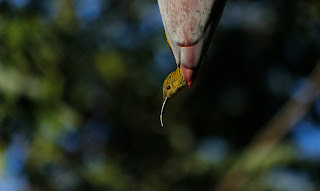
Streaked Spiderhunter-How to Photograph thsi tiny Bird!
This tiny bird with its sharp
and loud call yet considered large in its family often hangs upside down
sucking the nectars with it long curved black bill. This active bird with black
streaks mostly and greenish-yellow underparts love more nectars than its main
diets of invertebrates like spiders which must have been probably named after. Thus,
this bird’s name must have been derived from its diet rather than after
discovering ornithologist or scientists which often happens in new species naming
in animalia and plantae kingdom.
But this bird may definitely love nectars more than spiders for its sweet taste. Sweet is always preferred over bitter by all and so is the irony of our lives. The local name for this species named Streaked Spiderhunter (arachnothera magna) in various regions must have been undoubtedly after the banana flower. So, its local Lhotsam/Nepali name is Kayra Bunggay meaning Kayra-banana,Bungga- banana flower. Similarly, in Khengpa it is called Chib Bja. Thus, many of us must have seen this bird only in banana flower except by the birders or experts. I have too rarely seen them feeding in on spiders.
So, if you are hunting this
species for a good photograph and its related research studies, you can wait by
the banana flower. If you don’t have one, don’t wait to plant and grow the
banana tree in your kitchen garden. It will keep your garden moist and healthy.
It will give delicious banana and invite your subject for super shot.
However, you need to be innovative for the hunting ground for close up shots if you have short gun. I mean the short telephoto lens like 250 mm which I own. One can always ambush from the bushes nearby if its available. But this will not give you a technical photography position and angle in bird photography because the banana flowers will be always hanging on higher level in its tree unless you are taking a photograph from the equal ground height. This is because the subject of the photograph must always be the same eye level height for perfect photo in photography world. It might differ in category of photography but generally it applies to all.
But, it’s not an easy task to
get this rule implemented on the ground of bird photography because your
subjects keep moving within a second to minutes from branch to trees to sky all
of sudden. This is why bird photography is one of the most challenging in the
wild life photography category. So, how to hunt down this fast and active
hunter bird. To get an eye to eye level view and good shot, one must climb the
tree or make a hiding post. I didn’t try any of these techniques but I climbed
on the post I made for my spiny vegetables like beans and pumpkins. It gave me
good subject position level though not perfect. One can try to make a hideout
post for perfect level. The other good option is to shoot from the windows or
doors of your house if the banana trees is nearby which I tried at my seven days’
quarantine facility (QF) center in Manas Hotel, Panbang, Zhemgang.
While after fixing all the above
setups and settling for your shoot, you are not yet done. You must have stable
footholds or space either to wait standing, sitting or lying flat on whatever
support you have made it for the purpose. In my vegetable post I both sitting
position and lie down snipper shot position with my camouflage suit. There you can’t jump any time of the day or whenever
the bird comes. You need to choose the best lightning period of the day.
Photography is all about playing with lights some say and yes it’s about light
with skills. In general, we need good lighting of the day from sun rise to sun
set. For, beginners like me this general concept of day light is enough unless
the subject is directly from the source of light or sunrays. Birders and expert
recommends early morning sunrise hour and evening hour is the best rather than bright
sunny day.
It makes a lot of sense in avoiding
the subjects’ shadow in the photograph and the reflection of lights from the
birds’ feathers. So, prepare yourself to climb the post when the morning
sunrays hit the banana flower. Your subject will not look for your sunlight
time as it starts as early as rays dawn to dusk. Adjust your self-fine and be
ready for minutes to hours’ stillness position. We need to make the environment
coping for the bird to its natural surrounding than right away clicking the
bird as soon as it lands. This is an undisputable strategy of losing your bird
for the perfect shot. Bird photography is about patience and not only about
passion. Thus, with these things in mind, let the bird settle down for its
nectars and in between, you can start your final goal. You are good to go once
they found, the flower surrounding is safe enough for them to hang on.
You can take rest once it goes
to another flower or next location but be sure that it will come again in
another 30 minutes’ times earlier or later. This, routine will go on from
morning till dusk and you can certainly expect minimum five times a day. In this
intermittent feeding visit, you can easily hear its sharp call on its way in
the adjacent areas. It will first scan its surrounding areas for any danger
before it lands on the feeding ground. You can see its long neck swaying while
scanning the area. While, in the feeding ground also it continuously keeps on
high alert hearing your camera shutter and other intruders.
Who else could bother them while
feeding? The enemy could be other bird species who also feed on the flower. The
attack may be of territorial defense by other species or the fight over the
food itself. But to my surprise, their own partner does chase them away while
feeding as I have not seen them feeding together in this seven years birding
journey. They might be territorial or just they don’t want to share it. They will
feed merely a minute or little more sometimes and leave for the next visit of
the day. The bigger enemy who steals it nectar is the squirrel. I simply chase
them away because they damage all the flower bunch to fall off at a time with
its non-suitable teeth trying to suck the nectar unlike the long bill of the Spider-hunter.
Once the flower bunch is fallen, you got to wait for another day or two to get
the next layers of banana flower. Red-vented bulbul also tries to steal the
nectar sometimes.
This is how I hunt this hunter
called Streaked Spiderhunter (Arachnothera Magna) for decent photograph I have
taken so far. Taking care of all the above rules and techniques I have shared should
help the beginners some skills. It’s not about how expensive camera you hold
for the good or perfect photograph of your subjects but how skillfully you use
it, be it less budget camera or semi-pro to pro. One can understand the old cliché
that "It’s not about the camera it’s about the man behind the Camera". This could
be one strong reason that photography is an Art undoubtedly though many still perceive
it isn’t to what we call the paintings or sculpture the traditional form of an
Art.
The Shark Tank India
The Sony
Entertainment Television (SET) latest popular reality show on the screen was
the Shark Tank India. As such, SET is famed for screening the premier reality
show from KBC to Indian Idol and India's Got Talent. This recent show the Shark
Tank India took the Sony TV customers to different level unlike other earlier
reality shows ever hosted by the firm. It overwhelmed both the young and old minds
with its first ever season with 36 episodes which was premiered from 20th
December, 2021 to 4th February, 2022. It ended too soon for many
viewers like me and already anticipating its next exciting season episodes. The
reality of the show itself for its short episodes is satire for both the Host
and the Sharks over their respective high end business deal.
The seven dynamic Sharks in
their forties made their debut in this striking business reality show as the investors/judges
making the viewers already a fan for their respective personalities besides their
entrepreneurial empire’s value. The Judges or investors called Sharks became
the entrepreneurial celebrity overnight. The aspiring entrepreneurs present their
business model or ideas to the Sharks to invest in their companies. The News media
swiftly covered their growing popularity and many of the viewers must be
watching the off line episodes missing the live telecast by Sony TV.
Nevertheless, it’s worth watching. Now, most customers and consumers know who
are the founders and co-founders of the companies and its products like Lenskart,
SUGAR Cosmetics, boAt, Shadi.com/People Group, BharatPe, Mamaearth & Emcure
Pharma.
These successful entrepreneurs
and business tycoon of India not only rich in money but in diverse knowledge of
business as an IITians to CA to TEDx spokesperson. Mr. Ashneer Grover of BharatPe
is admired by many for his straight and forward negotiation with the aspiring
entrepreneurs. While some entrepreneurs and other sharks didn’t like his
approach for being so blunt and harsh sometimes. It went to the extent that he
lost to his fellow Sharks competing for the deal despites his lower equity
share stake offer to the entrepreneurs. This loss was the result of his too
straight comments on the products or business ideas denial because the
entrepreneurs not only wanted the financial support but equally good social
relation in the team. He was serious and
vocal most of the time. The only time he was seen (as many felt) cool and laughing
was at Kapil Sharma Show when the Sharks were invited by Kapil. However, he had
some soft corner for struggling young entrepreneurs with free shares equity and
loan.
Likewise, the other Sharks had their
own charisma of personality with their respective business background. The witty
and nifty to satire Anupam Mittal to cool and humorous Aman Gupta and Peyush
Bansal to three empathetic ladies Sharks- Vineeta Singh, Namita Thapar, Ghazal
Alagh won the hearts of millions. The three ladies Sharks were inspired by many
women entrepreneurs and signed the business deals despites the lack of success surety
to encourage the women in this men driven society. This is something an interesting
investment. While the men Sharks invested only in the business ideas that they
were impressed at for assured success. This is how differently we men and women
perceive things in real life business too.
The common thing I noticed in
them irrespective of gender was they declined to invest if there are more
numbers of family members’ partnership or shareholdings in the company. The
reason was simple that no business goes good along with more family members. This
reason still doesn’t give me an answer to my perception. To me family members are the closest and
trusted partner we can have in any business. But yes, it is the sad reality
that we don’t trust them in business because money is making us selfish. The world
would be better place to live in if business were done not only for money but
for supporting each other with integrity, love and compassion.
However, Mr.Peyush Bansal finally
became my favorite Shark after his offer to the young innovative farmer who is
known by his nick name Juggadu Kamlesh (Kamlesh Nanasaheb Ghumare) of Malegaon
in Maharashtra. His brilliant and energetic presentation of his product
impressed all the Sharks and it was unquestionable deal moment at first. Every
Shark was captivated by his strong will power when he shared he took seven
years to build the very prototype of his dream company K G Agrotech. He was applauded
for his innovation without any engineering background and his only goal to
supply this simple affordable three tyred pesticide spray carrier rickshaw to
the poor farmers across India. But, each Shark started withdrawing with an excuses
of helping this nervous yet contended young man with crowd funding assistance. He
was even asked why he can’t work under some companies with his skills and his
answer again stuns the Sharks. He says, “I will have to depend to the company
and a farmer never depends”. He was pushed to the extreme that why he didn’t apply
the loan. To this, he again makes Sharks silent adding who will give the loan?
The voice of Peyush breaks the silence with the generous offer to this young
man. He invests 10 lakhs for 40% equity against the offer of 10% equity in 30
lakhs investment in young man’s company. The reaming 20 lakhs, he gives as a loan with
0% interest. This young man can refund the loan from the profits he makes in
his products in any undefined installment period. Isn’t this is amazing?
Thus, this is an interesting reality show everyone should try in the next season. This reality show gives everyone the mindset from young age to become successful entrepreneurs in future. We hurry in life to get a decent job and slowly realize that if I had ever started something a decade ago on my own? Everyone dreams for owning a big business but no one dares to take a risk to invest in it. The young entrepreneurs will boost the private sectors for the country’s economy in future. This show is in fact the Institution of Entrepreneurs I would call it.
Kitchen Gardening- Part I
Kitchen gardening is not only my hobby but it is where I was raised from by my humble parents. They told me, “This is what we do for a living”, when I was young to understand the matter. Yes, now I fully understand that human need food for survival not stones.
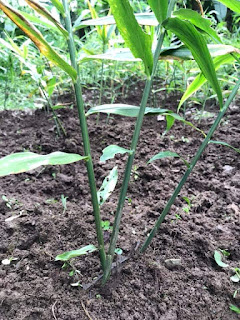
If there are any spices in the garden of a farmer, it would be Ginger next to chillies and other vegetables. One would not miss it especially in Rai’s garden for it plays vital role for their Shaman. It serves more value in the power of his mantra than simply a spice for all. The myth of people’s fingers and limbs getting bend after entering Rai’s ginger garden need deeper knowledge of the experts like Shaman and elderly family member. Thus, my neighbors and In-laws don’t step in my Ginger garden and I feel safe. Yes, Rai does special puja called Mangchama/Pitra during its harvest time. In the past, our parents practiced chicken offerings to the deities (Pitri) and enjoyed chicken dish called Wachipa with local brewed alcohol. The end to this bonism practice in our family lately succeeded with fruits and flower offerings in the Puja. In-fact all casts do some offerings before harvesting any fresh farm products. It is logical to practice the offerings to any deities or most importantly to the Nature in return.
It is one of the most important spices with its magical benefits with very less side effects unless consumed in extra dose. It is the only spice that would make farmer harvest with zero loss in the product harvest. It is safe from the danger of any pests or animals or human theft as per the Rai’s mythology. They can harvest twice, the main ginger root called Mau and the fresh product. The Mau which is still fresh and healthy are harvested after it gives strong shoots with it young ones around. The matured fresh roots are harvested after it attains the harvest period normally by the Autumn season. The Mau roots can be taken out in Summer that are sown in the Spring. The young shoots get its weeds off and rich top soil around for the good harvest.
So, farmers you have right choice of spice to be produced in large scale. Anyone can try in their kitchen garden for consumption and see the magic of your organic product. Self Sufficiency must start from the individual house not at the National level.
The Lockdown Escape
Three years of run and hide from
the Virus made the world tired but the small Himalayan Kingdom of Bhutan is
tireless with the least number of COVID-19 death (6 only) among the pandemic
hit nations. Bhutan is still holding on to its only first antidote called
lockdown to break the chain and eliminate the virus while many nations started
to live with it.
We prayed and hope for the new
year (2022) beginning but the existing variant Omicron proved to be more infectious
among all variant to all age group of the population. Though considered less lethal than
earlier variant Delta but the world is yet to know even its first variant
itself. If not, we would have been already eliminated by now. Thus, this
variant has crippled the world further and to expect another super variant
would be no surprise to us.
This variant too didn’t leave me
to escape the lockdown for the third consecutive year and that too away from my
family. I decided to take a bolder step and started an official tour with my
team/colleague to initiate the prolonged project in the East affected by the
pandemic. Upon genuine government
project request to the Taskforce authority in Phuntsholing I was allowed to take an Indian
highway with the escort convoy as VIP. It was exciting yet scary to drive from
the highest risk area as we perceive. I was briefed thoroughly on Indian
highway travel protocol in convoy. (that I should have Indian currency note
denomination exchange ready. To receive the change in a polythene/plastic from
the Toll Gate counter. To use the hand sanitizer after each Toll Gate. Never to
overtake the vehicle and drive in convoy. Full time mask ON). With all these
strict protocol I finally checked into our first destination and woke up next
morning only to find out the 72 hours’ blackout period for 14 Dzongkhags/Districts
in the country.
The lockdown kept on extending
with surging cases in the community to third month in row and I was locked for
exactly one and half month as a guest to my friend’s place. It was more than a
homely stay in my friend’s place with exceptional hospitality and comfort. I
could cook myself of my choice sometimes and show case my southern culinary
skills and taste to my host. I also revived their fallow kitchen garden with
top soil all the way from his Mine site and leave soils from the forest nearby.
The soil was further enriched by cow-dung manure. There we tried some potatoes
in first bed. We sowed some green chilli seed and beans along with cucumber. The tapioca stem was also planted to the end
bed and green chilli sapling in the richest bed. The potatoes and the beans
started to sprout in green before this hell lockdown could relaxed. I could
sense that I can take these harvest if I keep waiting to reopen the lockdown.
Each day the lockdown came to be stricter confining to respective residence. My
lens (DSLR) kept me alive capturing the feathered beauties and deer through the
windows. But the prolonged homestay killed me inside every day with incomplete
goal and yet to reach the final destination of my tour.
Finally, the Taskforce and the
Toll Free number 1195 team Pemagatshel came to my rescue with all prerequisite formalities
like e-pass, RT-PCR negative result and vehicle to Quarantine Facility (QF) at
Manas Hotel at Panbang on 1st March, 2022. It was the new dawn of dark straight
forty-five days and driving towards my final destination to undergo a mandatory
one-week quarantine for my return journey back to station without accomplishing
my task. This is ridiculous. I can do my work for few days after I complete the
quarantine if there is no lockdown here but I have to go another round of
quarantine to move back to my station as this area also being a high risk area.
So, if this quarantine is successful with negative RT-PCR test on 7th
day, we will be escorted in convoy till Rendibi bridge which is a green zone
area near Tingtibi, Zhemgang. The green zone also never certain as it becomes
red and yellow all of sudden.
On my way from Nganglam to
Panbang QF also it was straight drive without mixing to the community as
directed by the authority. Thank God there was not even a nature call on the
way where I should have had to come out from the vehicle. There is no way one
can breach the protocol and I even ignored (to say hi from car) to my relatives
who were working on the road side and my colleague’s parents waving to us from
their residence below the highway. The Dessup personnel instantly escorted us
to the room upon reaching the QF considering our visit from high risk zone of
Nganglam. The room is cozy with standard hygiene. I am waiting for my
successful quarantine and drive home through the unexpected surprise on the
way. Let’s hope for the best. The quarantine Day 1 just started today.
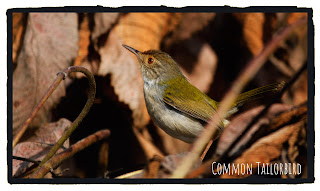
The beauties through my lens and through the windows of locked room. Enjoy the below pictures!
Kaabi Hung Mo Affnoi
Malai Kaabi Huna Moncha Ra Aafno Dhun Sunna Moncha Ani Timro Mon Chuna Moncha! Malai Kaabi Huna Moncha Kunai Din Timi Sanga Runa Monch...
-
I ran after the cattle as a cowboy free in the wild, I ran into the wild when cattle graze in the field, I ran into the wild to collect gras...
-
The soporific night welcomes the dawn, The dews gently take the eternal leave from the lawn, My slothful eye wakes me up from the sleepless ...
-
I wish I was Back, For the Final Time Altogether, With All The Dollars In A Sack, I Told after Checking-In To My Brother ! My Friends and F...