Mining is often regarded as threat to environment and living
entities. In general, people see its negative impact more than its positive
ones. Any human activity today has its both advantages and disadvantages. The
modern technology offers us the most comfortable lifestyle at its worst
negative impacts to the history of mankind. Only handful of people today live
the life that is of the purpose. Similarly, mining has been the human tool for civilization
and modern development. The contribution of mining in modern era is unmatched
to any advanced global industries. Not to forget that even the basic
necessities like water, food, shelter and infrastructures are the results of
mining and yet the polemic stand of the people for mining still exists.
The negative impacts of the mining to the environment, human and
the wildlife are inevitable yet controllable and mitigable. There is no direct
or immediate threat to lives unlike the fishes we are losing in the dams to
light our home which we call the Hydropower a Green Energy. A friend of mine
who is a teacher always reminds me of Green Mining in future and is not far
from the truth that it is covered in our only development philosophy of Gross
National Happiness. However, this dream must be the dreams of all Bhutanese not
only of my friend and me. Dreaming is not enough unless it is executed.
The concept of the same is already in mining industries across the
globe in scientific and ecofriendly mining methods but with less results. The plans
are best laid down but with minimal execution in the fields. The failures and
the negative impression of mining is earned either by the unfaithful industries
or the geography itself.
The mining cycle of exploration in the virgin forest and mountain,
development and extraction of minerals and final reclamation of the mined-out
areas is of decades activities. While in the process of mineral exploration and
active operations, the habitats of the birds and the animals are affected
although with no direct threat to lives as it moves to nearby areas. However,
the birds mostly adapt with mining activities and thrive in the atmosphere over
the periods.
The coexistence of birds in mining area is best observed compared
to other animals. As such, most of the birds’ species inhabit near human
settlements and activities for food and shelters against the predators. They
still trust some human can protect them. Interestingly, mining attracts
different birds’ species for feeding ground and habitats for many. The Paddy
field Pipit, Olive-backed Pipit, Wagtails, Thrush, Stonechats, Bushchats, etc
love open and dry grounds in the Mines.
The beautiful and shy Wall Creeper visits the Mine in winter
season in southern areas and forage the spiders and insects in the open mining
benches. After escaping the cold winters in the higher altitudes, it again
beats the summer heat by migrating to higher altitudes in late spring. The
Red-wattled Lapwing often feed and dwell in the abandoned mining benches. The
common Krestrel and other Raptors or Birds of Prey often hover over the mining
areas to hunt for its prey.
Figure 1: Wall Creeper at Pugli River , 23rd February, 2023.
The most prominent habitat is for the Nightjars which feeds and
breeds from post spring to summer till they leave in autumn for some time to
come back again in the same dry and abandoned or reclaimed benches. Three
Savana Nightjars Juveniles and one Large-tailed Nightjars Juvenile got successfully
fledged last year (2022) without being disturbed by the mining activities though some minor disturbance are observed in the nesting period due to noise pollution. Both
the Savana and Large-tailed Nightjars inhabits the Penden Limestone Mine at
Satergang (Khanigoan)/Nyoenpaling (Pugli), Phuntshopelri, Samtse. It is thus,
more advisable to leave some barren or abandoned mining benches for these and
other species. The mining reclamation in future must be focused on birds’
habitats creation than just high value economic trees or land development
purposes for buildings or structures.
Figure 2:
Savana Nightjar with two Juveniles at Penden Limestone Mine, 21st April,
2022.
Thus, mining creates birds’ habitat rather than destroying the
same as most environmentalist or regulators would see. The Black-throated
Thrush also inhabits the abandoned benches. In what it looks so dry and
unsystematic mining benches thrive beautiful birds’ species. Not far from the
mining site at Pugli village, the first sighting of Black-headed Cuckooshrike (Lalage melanoptera) which was
new to Bhutan shows that new species can also inhabit. It was recorded on 19th May, 2021. It visits the same site
annually in same season. Likewise, the Eurasian Sparrowhawk (Accipiter nisus) which was second record
to Samtse after 1960s and the Dark-sided Thrush (Zoothera marginata) from Pendenling (Gomtu) which is also a third
record to Bhutan as per the experts are the significant records of various birds’
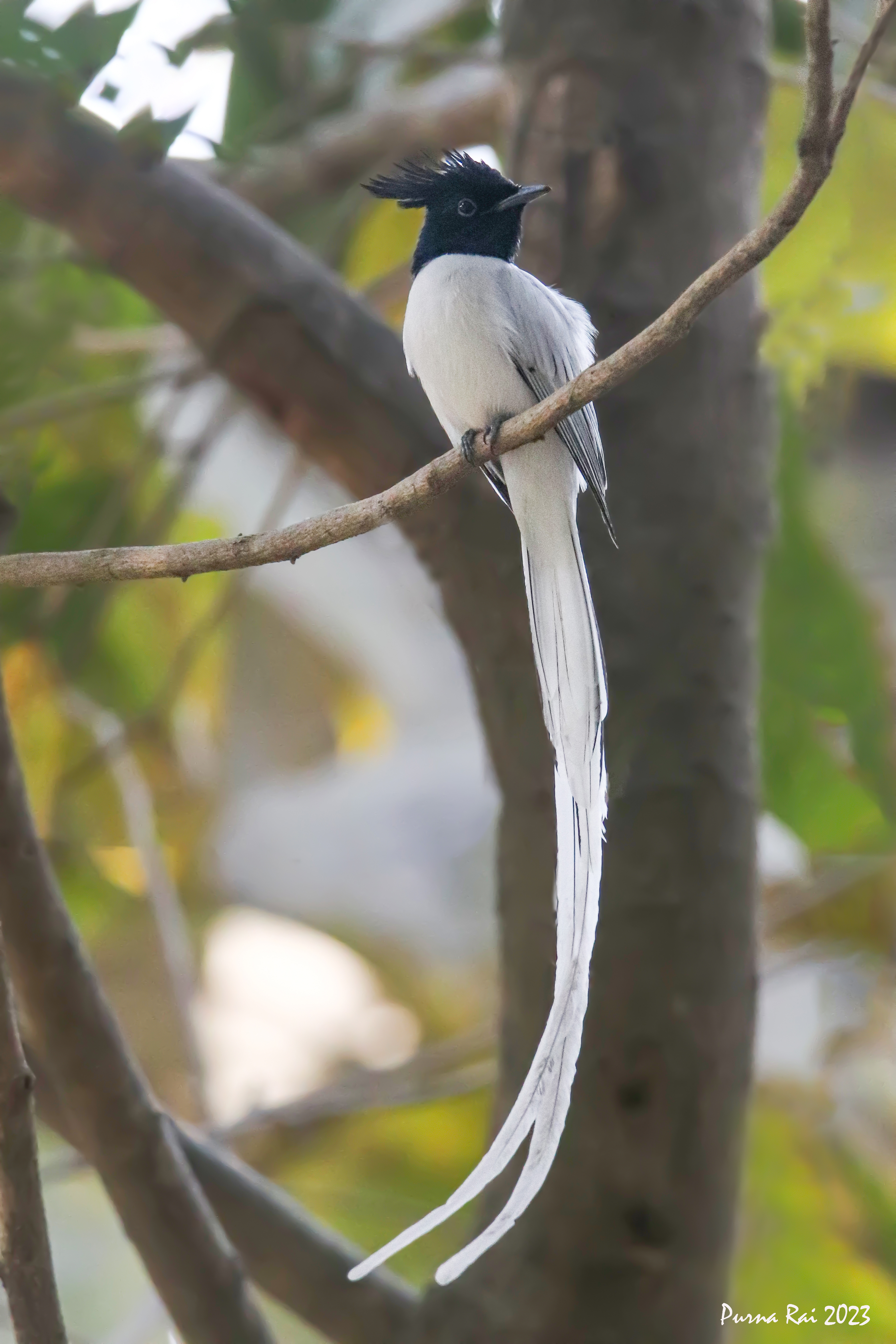
species in the vicinity of mining areas. The first record of Indian Paradise
Flycatcher (Blyth) in Phuntshopelri, Samtse from Gomtu in January, 2023 was
another milestone in Phuntshopelri Birds Lists to 223.

Figure 3:
Large-tailed Nightjar at Penden Limestone Mine, 21st April, 2022.
Having said this, we can’t be complacent to protect them in sync
with our developmental activities. Birds are important species on earth and
they play vital role in the ecosystem. Development in unity without having to
comprise the lives of Birds and other species are of paramount important. The
mining and any other industries must play active role in protecting and
conserving the birds’ species. For example, the artificial vernal pool created by
Penden Cement Authority Ltd. (PCAL) in one of their Mines in Phuntshopelri,
Samtse is attracting birds and wild animals. The Dusky Thrush which is new
record to Samtse was recorded by the side of this vernal pool. Likewise, we
choose the plant species which attracts birds with its flowers for their
natural habitats. The Ficus religiosa or pipal tree grows in a degraded area
and its fruits are diets for many birds. The other tree species PCAL tried in
Uttare Mines is the Coral tree/ Erythrina a fast-growing species in this region
and its flowers attracts various birds’ species.
The industries and
companies do practice eco-friendly operation but without an active employee or
the leader with nature loving heart, the environmental mandates may be
compromised. Thus, the industries and institutions ought to play proactive
roles in conservation than the conservation organizations in reality. More
industries and developmental activities are in pipelines and we can’t deny the
economic progress of the country. Nevertheless, our efforts to conserve the birds’
species in vicinity areas of the existing and upcoming projects in the future
is must.
Figure 4: Indian Paradise Flycatcher (Blyth) first record of this species in Phuntshopelri Gewog, Samtse from Pendenling (Gomtu) on 27th January, 2023 by Yoga Prasad Chapagai at his work place(PCAL) . The above photos were taken on 21st and 17th February, 2023 respectively.